

KURULTAJ – tribal assembly of the Hun – Turkic nations, celebration of the preservation of the ancient traditions

KURULTAJ 2026. 08. 14-16. Bugac, Hungary
FRIDAY, AUGUST 14
12.00 Opening of the Handicraft Market
15.30 Musical parade in the stage area – start of the musical performances
ARENA
16.00 Start of rehearsals (Nomadic Parade – Nomadic Wedding)
17.30 Main rehearsal of the military review/parade
20.30 The Fiery Warriors of Turan: Traditional Hungarian horsemen (csikós) performance by the Dabas Csikós Riders
Fire-themed nomadic trick riding show by Ferenc Kovács’ stunt team. The Ónodi brothers performing as „Foot Fire Warriors.”
STAGE
16.00 Keleti Szél Opening parade
17.00 Concert by the Regélő Fehér Táltosok
17.30 Concert by Zoltán Fábián
18.30 Boglárka Fehér and the Shaman drummers
19.00 Concert by Varkocs (Felvidék)
20.45 Concert by Arqaim (Kazakhstan)
22.30 Arslanbek Sultanbekov and his band (Turkey – Turkic-Nogai concert)
23.45 Hajdux traditional folk dancing
SATURDAY, AUGUST 15
10.00 In the forecourt of the „Eastern Bazaar” domed main entrance, the Uzbek, Turkmen, Azerbaijani, and Uyghur handicraft exhibitions and market stalls open. The Kazakh, Kyrgyz, and Mongolian demonstration yurts (ethnographic exhibitions and market) also open.
10.10 Attila’s Tent (Exhibition Grand Yurt): Opening of the major archaeological and anthropological exhibition „From Ordos to Őrség: The Treasures of the Huns, Turks, and Hungarians.”
Opening of the Tent of the Turkic Nations exhibition complex, with welcome speeches by: Abdullah Eren (President of TİKA), András Zsolt Bíró (President of the Hungarian Turan Foundation), Zoltán Varga (Founder of the Hungarian Turan Foundation)
18.00 Conference Tent: Annual Archaeological Congress of the Turkic Academy, coordinated by Prof. Şahin Mustafayev (President of the Turkic Academy), with the participation of the Hungarian National Museum and the Hungarian Natural History Museum.
ARENA
09.00 Turan Tournament – Nomadic combat competition with alternating weapons (Turan Arena)
10.30 „The Blessing of the Turul” – Ritual falcon release, shamanic drumming, and blessing of the arena, led by Őskü Fehér Holló, with the participation of the Hungarian Turan Falconry Association and the Karabaksa Community
10.35 Greyhound hunting dog demonstration and racing (National Greyhound Association)
11.00 Mounted falconry demonstration by Zoltán Krekács
11.30 Kyrgyz nomadic living history presentation and reenactment of the Epic of Manas
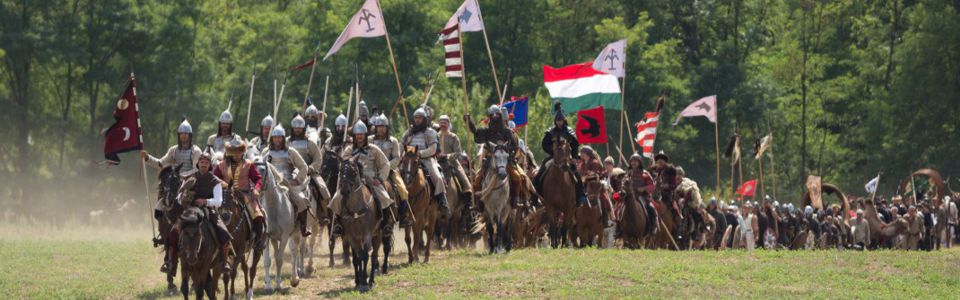
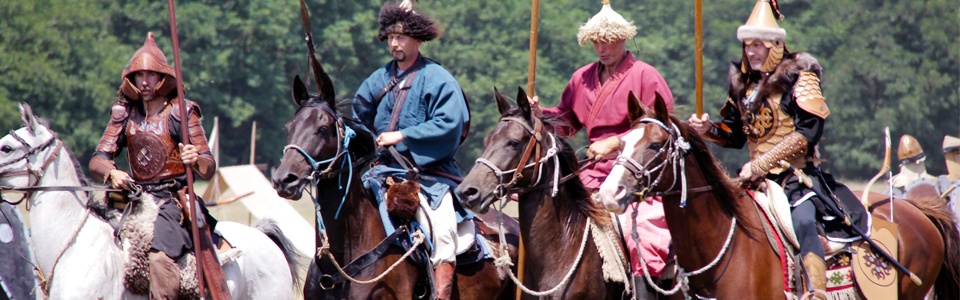
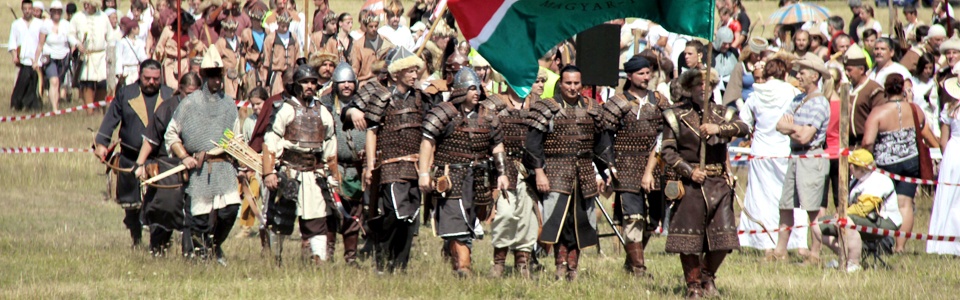
12.00 Nomad Parade – Living history reenactment of the Hungarian Conquest Period, featuring horses, camels, and wagons. The mounted vanguard is led by Ferenc Kovács, the main cavalry by Attila Rónai, and the infantry contingent by Gábor Kopecsni.
13.00 Grand Military Review – Large-scale mounted and infantry parade of historical reenactment groups from the Carpathian Basin and the East
13.30 Official Opening Ceremony, welcome speeches, and ceremonial procession of the flags (carried by galloping horsemen)
Speakers: Kubanychbek Ömüraliev – Secretary General of the Organization of Turkic States, László Szabó – Mayor of Bugac (Host), Kürşad Zorlu – Ministerial Commissioner for Cooperation with the Turkic States and Member of the Grand National Assembly of Türkiye, Yusufjon Usmanov – Minister of Culture of Uzbekistan, Sultan Raev – President of TÜRKSOY, K. Mirbek Mamabetaliev – Minister of Culture of Kyrgyzstan, András Zsolt Bíró – President of the Hungarian Turan Association and Chief Organizer.
14.00 Kurultaj Arrow Volley – A spectacular mass volley by mounted and foot archers in honor of the great ancestors and the heroes of the Battle of Pressburg (907). Organized by the Historical Division of the Hungarian Archery Association and the Hungarian Turan Association, with the participation of master archer József „Wolf” Mónus.
14.40 Nomad Wedding – Living history reenactment of a Hungarian Conquest-era wedding, including the traditional bride kidnapping ceremony.
15.30 Performance by the Dabas Csikós Riders (traditional Hungarian horsemen)
Arena preparation
17.00 Felföldi Dalia School – Infantry combat demonstration featuring the sabre, bow, battle axe (fokos), and whip
17.30 Köböre (Kökpar) Tournament – National Championship Final
18.00 Demonstration by the Pusztai Róka Equestrian Team: „Following the Path of the Steppe Horse Nomads”
18.30 „Puszta Gallop” – Mounted speed race (qualifying round)
19.15 Awards Ceremony
STAGE
10.00 Storytelling with Szende Csernik
11.00 Uyghur concert and dance performance
11.15 Natali Deniz, Gagauz singer
11.30 Kyrgyz folk music and dance performance
11.45 Concert by Arqaim (Kazakhstan)
12.15 Concert by the Regélő Fehér Táltosok
13.30-15.00 Intermission
STAGE
15.00 Concert by Nuriyye Huseynova and Fazila Rahimova and their band (Azerbaijan)
15.30 Dagestani folk dance performance
16.00 Dance concert by the Sherter Ensemble (Torgai Region, Kazakhstan)
17.15 „Turn Around, My Little Bay Horse” – Hungarian folk dance theatre performance
18.30 „Fire of Ahal” – Turkmen folk music concert with dancers
19.45 Concert by Gülkathisa Ayimbetkizi with dancers (Uzbekistan)
20.45 Concert by Mária Petrás and Majda Maria Guessous
22.30 Concert by Kerekes Band
23.45 Concert by Arslanbek Sultanbekov and his band (Turkey Turkic-Nogai concert)
01.00 Hajdux traditional folk dancing
SPORTS TENT
National Belt Wrestling Championships – Adults (18+) Organized by the Hungarian Köböre and Traditional Sports Federation
09.00-10.00 Weigh-in
10.30 Competition begins
ARCHERY RANGE
09.00 National Traditional Archery Championship, organized by the Hungarian Traditional Archery Association (MÍSZ).
COMBAT ARENA
09.00 Nomadic Armoured Combat Tournament – Full-contact fighting competition in traditional nomadic armour, organized by the Hungarian Köböre and Traditional Sports Federation, under the direction of László Nagy (Tolnai Turán).
SUNDAY, AUGUST 16
ARENA
10.00 Greyhound hunting dog demonstration and racing (National Greyhound Association)
10.30 Mounted falconry and eagle hunting demonstration
11.00 Mounted wrestling
11.30 Demonstration by the Zengő Nyíl Mounted Heritage Association, led by Attila Kiss
12.20 Nomad Parade – Living history reenactment of the Hungarian Conquest Period, featuring horses, camels, and wagons
13.30 Grand Military Review – Parade of mounted and foot warriors in Hun, Avar, and Hungarian Conquest-era military attire
14.00 Welcome addresses by: András Zsolt Bíró – President of the Hungarian Turan Association and Chief Organizer Prof. Şahin Mustafayev – President of the Turkic Academy
Ceremonial procession of the Hungarian national flag and the flags of the kindred nations.
14.30 The Great Western Campaign of the Hungarians (926 AD) – Historical battle reenactment featuring mounted and foot warriors. Battle Coordinator: Botond Félegyházi
Mounted groups:
Vermes Tribe (Highlands/Felvidék)
Pusztai Róka Equestrian Team
Anda Mounted Combat Association
St. Michael Mounted Guard
Zengő Nyíl Historical Archery School
Onogur Cavalry
Mecsek Lándzsája Cavalry
Infantry groups:
Felföldi Turán
Dalia Martial Arts School
Tolnai Turán Heritage Sports Association
Csongrádi Turán Heritage Sports Association
15.00 Nomad Wedding – Living history reenactment of a Hungarian Conquest-era wedding, including the traditional bride kidnapping ceremony
16.00 „People of the Puszta” – Equestrian Skills Competition Final
17.00 „Puszta Gallop” – Mounted Speed Race Final
18.00 Official Results Announcement and Awards Ceremony (sports competitions)
19.00 Ceremonial Sacred Fire, led by Őskü Fehér Holló
STAGE
10.00 Storytelling with Erika Hajós
11.00 Boglárka Fehér with Kazakh musicians
12.00 Kyrgyz music and dance performance
12.45 Dagestani folk dance performance
15.00 Folk dance performance by Csángó youth
15.30 Uyghur music and dance concert
15.45 Natali Deniz, Gagauz singer
16.00 „Fire of Ahal” – Turkmen folk music concert with dancers
16.15 Concert by Zoltán Fábián
16.30 Concert by Gülkathisa Ayimbetkizi with dancers (Uzbekistan)
17.15 Dance concert by the Sherter Ensemble (Torgai Region, Kazakhstan)
18.00 Concert by Nuriyye Huseynova and Fazila Rahimova and their band (Azerbaijan)
18.30 Concert by the Regélő Fehér Táltosok – Closing shamanic music performance of the festival.
Начало формы
SPORTS TENT
National Belt Wrestling Championships – Youth (15-17) and Junior (17-20)
Organized by the Hungarian Köböre and Traditional Sports Federation
09.00-10.00 – Weigh-in
10.30 – Competition begins
Конец формы
ARCHERY RANGE
09.00 Champion of Turan Mounted Archery Competition, held under the original Kassai competition system.
COMBAT ARENA
09.00 Nomadic Sabre Fencing Tournament, organized by the Hungarian Köböre and Traditional Sports Federation, under the direction of László Nagy (Tolnai Turán).
SMALL PADDOCK
09.00 „People of the Puszta” – Equestrian Skills Competition (Qualifying Round)
EXHIBITIONS
Attila’s Tent – The World’s Largest Yurt „From Ordos to Őrség: Treasures of the Huns, Turks, and Hungarians” – A major archaeological and anthropological exhibition.
Featuring exceptional reconstructions of jewellery and weaponry from the Carpathian Basin, Central Asia, and Inner Asia.
Hungarian National Museum Exhibitions
„Tents of the Ancestors” – Two Giant Exhibition Yurts
Portrait Gallery of the Ancestors – An anthropological exhibition featuring facial reconstructions based on Hun, Avar, and Hungarian Conquest-era archaeological finds, offering a unique exploration of archaeology, physical anthropology, and history.
„The Bow of the Ancestors, the Ancestor of Bows”. A historical bow reconstruction exhibition and demonstration, introducing visitors to the natural materials used in traditional bow making, traditional craftsmanship techniques, and historical tools, presented by the Hungarian Historical Archery Society.
ALL-DAY ACTIVITIES
Yurt Camp – Traditional nomadic lifestyle demonstrations.
Craft Market – Located in front of the domed main entrance of the Eastern Bazaar, featuring traditional handicrafts and folk art from Kazakhstan, Uzbekistan, and Mongolia.
Try Traditional Archery – Visitors can experience traditional archery behind the Lecture Tent, supervised by the József Huszka Heritage Association.
Parent & Baby Rest Yurt – Located at the Information Point, next to the Press Tent.
Hosts & Event Announcers
Ignác Farkas – Actor, recipient of the Jászai Mari Prize
Péter Vári-Kovács – Actor
Mihály Kurdics – Equestrian commentator and music coordinator
Ferenc Kovács – Chief Equestrian Leader (Nógrádi Turán)
István Vermes – Honorary Captain of the Cavalry
Attila Rónai – Commander of the Main Cavalry Force
Krisztián Benyó – Arena Coordinator
Battle Coordinator
Botond Félegyházi
Mounted Groups
Vermes Tribe (Felvidék)
Pusztai Róka Equestrian Team
Anda Mounted Combat Association
St. Michael Mounted Guard
Zengő Nyíl Historical Archery School
Onogur Cavalry
Mecsek Lándzsája Cavalry
Infantry Groups
Felföldi Turán
Dalia Martial Arts School
Tolnai Turán Heritage Sports Association
Csongrádi Turán Heritage Sports Association
Introduction of the guests – the representatives of 27 nations
The list of participating nations and tribes: Azerbaijani, Avar, Bashkir, Bulgarian, Balkar, Buryat, Chuvash, Gagauz, Kabardino, Karachay, Karakalpak, Kazakh, Madjar tribe of Kazakhstan, Kirghiz, Kumi, Mongolian, Nogai, Uzbek, Madzsar tribe of Uzebekistan, Tatar, Turkish, Tuva, Turkoman, Uyghur, Yakut, Hungarian.
Archeological and anthropological exhibitions in the ’’Yurt of the Ancestors’’
One of the most successful elements of the Kurultaj is the anthropological and archeological exhibition, called the ’’Yurt of the Ancestors’’, which consists of two huge yurts. The exhibition is arranged in cooperation with several museums. This year, there will be a unique additional exhibition, called the Elite Corps, which won the title of ’’Exhibition of the Year’’ in 2014. The exhibition shows the rich archeological finds of cemeteries located near Karos of the Hungarian conquest period. Its elements are exhibited in the Ottó Herman Museum of Miskolc, and now part of the exhibition will be visible at the Kurultaj as well.
’’Yurt of Atilla’’, half-circle painting of ’’The Arrival of the Huns’’, exhibitions
Just like in other years, in between the two exhibition yurts, the world’s largest yurt will be constructed, the ’’Yurt of Atilla’’. The diameter of the yurt measures over 20 meters. The reconstructions of archeological finds, the anthropological facial reconstructions, and paintings in the yurt make the era of the Huns come alive.
The world’s largest yurt can be disassembled and it’s constructed of natural materials. Apart from the archeological exhibition, inside the yurt we will also be able to admire the enormous half-circle painting, called ’’The Arrival of the Huns’’. The painting measures over 20 meters and is a tribute to Atilla the Hun, who founded an empire in the Carpathian Basin.
The anthropological and archeological exhibition in the ’’Yurt of Atilla’’ is coordinated by a professional scientific team. The three huge yurts together are called the ’’Yurts of the Ancestors’’, and the exhibitions inside these yurts are realized through the cooperation of several scientific institutions.
Procession of Avar and Hungarian armoured horsemen, clothing of Hunnic leaders, Hun army
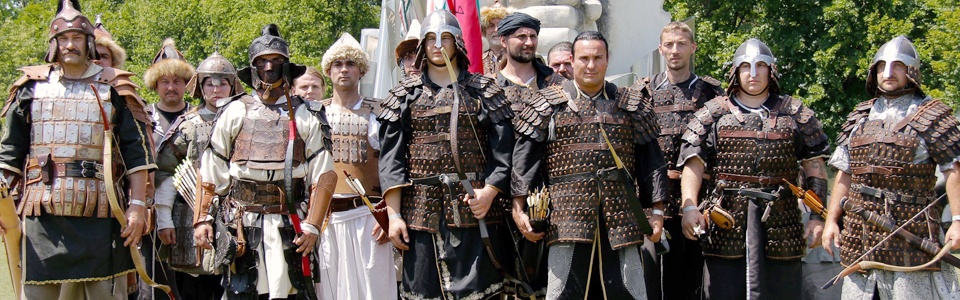
In the year 2010, the greatest sensation of the Kurultaj was the reconstruction of an Avar armour. In 2012, a group of Hungarian warriors with reconstructed armours of the Hungarian conquest period was also presented. In 2014, we could in addition admire the reconstruction of a Hunnic leader’s clothing, and a group of warriors following him on the battle field.
Experimental archeology demonstrations
Archeologists and artists will present ancient bronze casting techniques in a spectacular way. Also, we will be able observe a master of a very important craft of that period that’s become rare in our time, namely the weaponsmith. There will be a possibility to have a look at the working process of the weaponsmith.
Nomadic horse and archery competitions
The Turan Association announces horse racing, horse wrestling, and ’Köböre’ (Kökpar – Buszkasi) competitions, as well as a unique archery obstacle course competition with valuable prizes. There is no entry fee for the competitions. In 2016, teams of 5 and 10 players will compete with each other in the ’Köböre’ championship.
Armoured combat contest on foot
The armoured warriors on foot are going to battle against each other, wearing 9th -11th century clothing, armours, and weapons. The battles are not based on a planned choreography; they are improvised and therefore closely resemble the real battles of that period. The duel contest will attract a huge audience, and the competitors who participate in the duels will have the chance to win significant prizes.
Horseback combat demonstrations with the best warriors
During the three days of the event, we will be able to see numerous horseback archery and horseback combat demonstrations. Among others, the Vermes tribe from Slovakia (Upper Hungary), the ’’Pusztai Rókák’’ (Foxes from the Puszta), the Bodnár tribe, the Nagy tribe, and the Hungarian Turan Select Team will present themselves. (Note that the tribes refer to groups that belong to the Kassai Horse-Archery School.) European 9th – 11th century armoured soldiers will fight against Eastern equestrian nomadic warriors on the battle field.
Presentations
In cooperation with renowned Hungarian and foreign lecturers, just like in previous years, scientific presentations will be held in the tent of presentations. Apart from some informative presentations (journey narratives, geopolitics), there will be scientific presentations, which can be attended and understood by everyone who is interested. The topics will cover the ancient history of the Hungarians and the Turanian nations. All of the lecturers who will be presented at the Kurultaj are professional scientists and internationally recognized researchers.
Handicraft demonstrations and fair
People will have the possibility to get acquainted with the items and the work processes of craftsman and artisans. Only those who sell products that contain exclusively Hungarian (that is, from the Carpathian Basin) materials can participate in the fair.
Archaic and modern versions of traditional folk music and dance
There will be Hungarian and foreign performers who were never seen in Europe before.
This year, the artists of the invited brother nations who arrive to the Kurultaj will be holding demonstrations of traditional folk music and dances. For the first time, the Hungarian audience will have the possibility to see several dances and listen to music for which Europeans would have to travel thousands of kilometers to the East. The Turanian brother nations will be giving over 50 cultural performances.
Remembering our ancestors – fire ritual
On the occasion of this celebration, accompanied by numerous shaman drummers, the world’s largest shaman drum will be sounded by the shamans who recall the Hungarian ancient religion. In 2016, the Hungarians and the representatives of their brother nations will continue to celebrate the memory their glorious ancestors. The distant brothers are meeting again. We invite you to join us. Let’s pay tribute to the memory of our ancestors and their great deeds.
APPROACH:
Bugac Puszta, outskirts of the village Bugac. GPS coordinates: 46.676032, 19.652499
Camping:
Those who arrive to the Kurultaj with a tent (normal size, max. 5-6 m2) have the possibility to lodge at our campsite for 6000 HUF / 3 days / tent. Registration is not needed for the camping. Camping with a yurt is free, but for the yurt camp people are required to bring their own yurt.
There are hot water showers and toilets available on the territory. Security takes care of maintaining the order. Arrival on the campsite is possible from Friday morning, and there is space enough.
The price for the parking spot is 2000 HUF every time you arrive with the car.
It’s prohibited to make fire on the territory!
Smoking is only allowed on the designated places!
Application for the yurt camp:
jurtatabor.kurultaj@gmail.com
What facilities will I have to pay for at the event?
The entrance to the event is free, just like camping with a yurt. There is no entry fee for the competitions. The price of the parking spot is 2000 HUF every time you enter with the car. The price of camping in a tent is 6000 HUF for the three days of the event. Naturally, the foods and drinks that are sold at the event have to be paid for, but it’s allowed to bring one’s own food.
A BRIEF HISTORY
In the minds of the Hungarian people the memory of their Central Asian origins is still very much alive. Since the mid 19th century the genealogy of the Hungarian nation has been a topic of heated debates and discussions among different scientists. Over the past half-century, especially during the communist regime, the theory of Finno-Ugric origin of the Hungarians has been aggressively imposed with complete disregard to the variety of arguments. However, archaeological, anthropological and genetic studies tell us a different story. Modern scholars, particularly archaeologists and anthropologists, are of the opinion that the anthropological specificity and culture of the Hungarian people that conquered their land and made it home, is more analogous to Central Asian Turkic people with some Iranian and Scythian influences. In addition, the origin of the Hungarian tribes, to a large extent, can be attributed to Hunnic tribal alliance. One of the most important highlights of the history of Hungarians is establishing of historical homeland under the leadership of Arpad Khan (conquest of the Carpathian Basin at the end of 9th century).
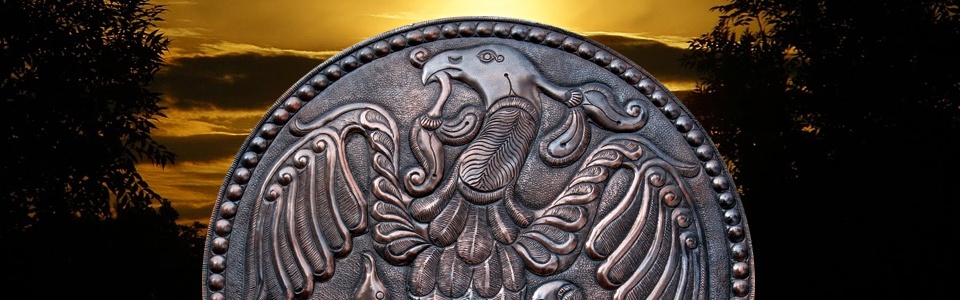
Hungary’s more than one thousand years of history in the middle of Europe has shaped its culture as the most westernized of the nomadic cultures. Today the Hungarian nation is united (without tribal division) but much of the Hungarian nation’s history is characterized by a system of tribal segmentation, like most nomadic cultures. One of the most ancient Hungarian legend is the story of binding the tribes by taking a so called „blood oath”. During this event the leaders of the allied tribes chose one from among them to be the great commander, and swore to serve him and his descendants. Almos was chosen whose name is derived from the Hungarian word „álom” („dream” in English). The tale behind his name and of his birth is another legend. In it, a mythical bird, the Turul, (falcon – tribal totem and the ancient symbol of the Hungarians) flew through the top opening into the yurt of Emese, a daughter of one of the noble tribe leaders, while she was sleeping (and dreaming) and fathered her a son who then was named Almos.
It was then the son and successor of Almos, the great commander, Arpad, who led the tribes when they took over the territories of the Carpathian Basin, hence the Hungarians gained their historical homeland. Therefore, the great leader, Arpad, is one of the most important figures of Hungarian history and a symbol of power and unity of the nation. Thus, the dynasty that the Turul had started according to the legend is named the dynasty of Arpad (or Turul dynasty). Arpad and his descendants have written the most glorious chapters of Hungarian history. This dynasty ruled Hungary for over 400 years.

Lord Árpád
It is noteworthy that the roots of the Hungarian tribes go far back into history and into the East, many hundreds of years prior to their establishment in Europe. From ancient legends and tales as well as the scriptures of medieval Hungarian historians we know that the tradition of Arpad dynasty comes from Attila the Hun.
Scientific research confirms that even before Hungarians found their new home country, other nomadic tribes were settling in the Carpathian Basin, they had become the western wing of the endless Eurasian steppes. These nomadic tribes eventually settled on this land and were the first people from various Kurgan nations and later also Scythian and Sarmatian tribes (starting in the early of 1st millennium BC). At the beginning of the 5th century Huns arrived at the territory of the Carpathian Basin and made it the center of their European empire.
It was here where the great leader, Attila the Hun, lived and ruled the empire After his death he was buried in his new homeland, under the waters of Tisza river. According to the legend, to bury Attila, his people built a dam to block the waters of the Tisza river at one of its islands After Attila was buried the dam was removed and water flowed again. Thus, under the big river Attila, the mighty leader of the Huns „sleeps the eternal sleep „.

Atilla painting in Bugac
After the death of Attila, German tribes that had been serving the Huns started to take over territories of the Carpathian Basin. In 568 AD, they were defeated by the nomadic Avar tribe from Inner Asia, which had built a very strong army under the command of Bayan Kagan. The Avar Kaganat was established in the conquered territory and it became the most powerful state in Europe at the time. It lasted until the Hungarians gained their historical homeland.

After the death of Attila the majority of the Hun tribes traveled east to the steppes of the northern Black Sea and the northern foothills of the Caucasus. Later, in 895-896 AD, a tribal alliance of Hungarians traveled West, eventually settling in the Carpathian Basin where they founded the European Principality of Hungary. This state was well organized and had assembled an extremely strong army. At that time this was the most powerful state in Central and Eastern Europe. The Hungarians collected tributes from a very large part of Europe and their conquests spread to the territories of modern Spain.
KURULTAJ – A MEETING OF THE TRIBES
Kurultaj is a celebration of preservation of ancient traditions, it serves as a revival of ancient Hungarian and other nomadic cultures, paying tribute to great ancestors.
Within the framework of this event the organizing party builds a large nomadic village that contains many yurts. A large number of horses also participate in this event. To this date, Kurultaj is the largest celebration of ancient traditions in Hungary that gladly welcomes guests, especially from Hun-Turkic nations with whom Hungarians have many historical and cultural ties.
This celebration attracts the people who preserve the ancient Hungarian traditions not only from Hungary, but also Hungarians who live on territories of boarding countries.
Kurultaj takes place is in the suburbs of the Bugac village, 160 km south of Budapest, at one of the most beautiful Hungarian steppe areas on the outskirts of Kiskunság National Park Here you can also find the largest sand dunes in Europe. This region is one of the centers of the Hungarian shepherd culture and equestrian sport.
HISTORY OF KURULTAJ
During the great migration Hungarian people came in contact with many different tribes and nations, and some of them settled in various regions. Information about it is preserved in many eastern Persian and Arab literary works. The search for those who had settled on the eastern lands had began during the reign of the Arpad dynasty. Many Hungarian scientists and people found additional purpose of their life by finding their relatives in the east.
The idea of establishing Kurultaj, the meeting of the Hungarian tribes, came about as a result of one of scientific expeditions to Kazakhstan organized by Zsolt Andras Biro, a Hungarian anthropologist and researcher at the Department of Anthropology of the Hungarian Natural History Musem. During a study in 2006, he collected DNA samples used to analyzing the Y chromosome. The results show that the connection between the Kazakh tribe called Madjar and the Hungarians of the Carpathian Basin (the Magyars) is not just in the name (pronunciation of Madjar and Magyar is identical), but are also linked via genetics. The results of this research have been published in one of the most prestigious (anthropological) scientific journals in the world the American Journal of Physical Anthropology. This work has prompted considerable international interest and brought members of the research group world recognition. In 2008, Zsolt Andras Biro was awarded recognition by the Minister of Culture of Kazakhstan, Mr. Ermuhamet Ertysbayev.

The word ” kurultaj ” and its variations in the Altaic languages (mostly of Turkic origin) translates as “meeting of the tribes”. It occurs amongst tribal nations and practically in all the nomadic cultures. Hungarian nomadic tribes also held these meetings, a fact that is mentioned in Byzantine and Arab written sources. At such meetings, important decisions were made, in particular, the leaders of the tribes would meet often to discuss military decisions and strategies.
These tribal meetings are a very important part of Hungarian culture. They are often mentioned in the classical Hungarian literature, for example in the novel Mor Jokai “Bálványosvár” the author writes: ” Szeklers sat at the kurultaj.”

Tribal meeting
Results of studies in Kazakhstan and other Central Asian countries drew attention of the scientists to the importance of kinship connections. This was well received by the Kazakh tribe called Madjar and they awarded Zsolt Andras Biro with a title of honorary council member of the tribe. In 2007, they held a tribal meeting Kurultaj and invited Hungarian delegation led by this scientist. It was the first Hungarian (Magyar) – Madjar Kurultaj. The event was held at Torgai region in Kazakhstan, far from the urban settlements, on the vast territory of steppes near lake Sarikopa.
This celebration included horse tournaments, wrestling, and concerts. The event brought together many thousands of Madjars that came from all regions of Kazakhstan to their homeland. As part of the celebration they held the opening ceremony for a new mosque that was built on the donations, and named after the progenitor of the tribe – Madjar baba.

2008
After returning from Kazakhstan, Zsolt Andras Biro and his friends decided to organize a tribal meeting Kurultaj at home in Hungary. Members of the Kazakh tribe called Madjar were invited as guests of honor. Celebrations were held in August 2008. Here was born an unprecedented consolidation in cooperation which resulted in the largest parade of people who treasured traditional heritage of the Magyars. The Hungarian woodcarving master, Sandor Nemes, hand carved and presented to Kurultaj a perfect six-meter tall tree of life, decorated with a beautiful steppe ornament. 60,000 people attended this event.
The councils of Kurultaj decided to organize the next meeting of all Hun- Turkic people for 2010.

2010
The large Kurultaj of 2010 continued the tradition in the spirit of the previous celebrations of 2007 and 2008. It strengthened the ties of kinship between Hungarians and Central Asian nations, as well as with nations in the Caucasus and Anatolian regions who continued the equestrian heritage of the nomadic civilization. All present gave tribute to such great ancestors as Attila, Bayan Kagan, Madjar baba, Kartsig warrior, and Arpad. This time Kurultaj attracted thousands of people and the number of visitors had almost doubled from 2008! Since 2010, the festival is held under the auspices of the Vice-Speaker of the Parliament of Hungary Sandor Lezsak.
Those nations that share the genetic traits and culture with Hun-Turkic tribes were invited to Kurultaj, and they all have sent their delegations to participate in this grand celebration. The event brought together not only high-level diplomats and scientists but also folk musicians and bands. Large numbers of people dressed as ancient warriors also demonstrated their warrior skills.

The representatives of the nations that came together at Kurultaj have signed the following statement:
„By the will and the blessing of the Sky
Hungarians, Madjar, Kazakh, Uzbek, Turkish, Azerbaijani, Uighurs, Kirghiz, Bashkirs, Chuvash, Bulgarian, Tatar, Turkmen, Karakalpak, Buryats, Nogai, Gagauz , Karachai, Yakut, Korean, Japanese – all brothers Huns, are jointly carry the responsibility for the fate of each other before the memory of the great common ancestors!
Community of Turanian people, numbering more than a hundred million souls yet again found each other for cooperation in the development of free society, respectful of tradition and kinship, and living in harmony with the natural laws of society, creating a cultural and economic community that unites the Hun-Turkic nations!”

2012
It is arranged for the Kurultaj – Hungarian Tribal Assembly to meet every two years. The representatives of all Turanian nations are invited to participate. Today the circle of participants has expanded by adding Karakalpakistan Autonomous Republic, the Turkish Republic of Northern Cyprus, Dagestanian Avars and representatives of Tuva.
The 2012 event was the largest celebration of the preservation of traditional heritage in Europe. 160,000 people attended.
The Kurultaj’s program has been strengthened over time.

The” Yurt of Ancestors” showcased various museum exhibitions as well as archeological and anthropological exhibits from different scientific organizations. This enabled guests to familiarize themselves with Hun-Avar-Magyar findings. In addition, other exhibits of the “Yurt of Ancestors” displayed skulls of the ancient Huns, Avars and ancient Magyars along with facial reconstructions. Visitors could also see the reconstruction of weapons and household utensils.
In 2012 the world’s largest exhibition of Nomadic Civilizations was displayed under the open sky.
Demonstrations of traditional folk music and dances went on during the entire time of Kurultaj.
The demonstration of military tournaments, performing archers, and skilled horsemen was spectacular.
Before Islam and Christianity, nomads of the great steppes had their own pagan beliefs and ancient religion. That is why showcasing the ancient religion of Hungarian and other nomadic people played an important role at the Kurultaj. One of the most advanced variations of shamanism is Tengriism, which has elements of social organization. This ancient religion of worshiping the forces of nature has played a very important role in the lives of our ancestors. In this religion Taltoshs, also called shamans, were mediators of nature, and often times they would also be healers. The very name of this religion comes from Taltosh. Elements of mythical beliefs (tree of life, a miracle deer, tambourine, the worship of fire, etc.) are present in all Hun-Scythian steppe cultures and despite minor differences, they point to their common roots. A big ritual fire ignites at the Kurultaj celebrating the memory of the glorious ancestors.
For the event of Kurultaj the organizers built a large nomadic village, consisting of more than one hundred yurts and military tents .
The craftsman and seamstresses of the Carpathian Basin that work with traditional styles organize high-profile fairs during the Kurultaj. In these fairs people have a chance to get acquainted with the work process of blacksmiths, basket weavers, artisans etc.
Ancient Hungarians were great horsemen. The horse was a vital part of military campaigns and everyday life. People drank horse milk – “kumis” and used it to produce a lot of different products.
Soldiers were buried either with their own or sacrificed horses (horse burial) or with a horse harness (horse symbolic burial). Modern Hungarian breeds of horses are world famous and experts have long debated the exact type of ancient Hungarian horse. Genetic studies have helped in this discussion. The analysis of the extracted DNA fragment from the skeleton horses from the 9th century (period when Hungarians formed their country) showed that of all modern breeds the closest to the ancient Hungarian is Turkmen’s breed Akhal-Teke.

Kurultaj is a very important event for a professional horseman and fans of horse riding. Besides a parade of horsemen, each Kurultaj holds horse races and various tournaments. Among European countries, only Hungary has preserved the traditional strategic team game for riders called „kokpar”.
Every Kurultaj has a big tournament for the traditional game „kokpar”, and traditional horsemen wrestling.
ACHIEVEMENTS OF THE BIG KURULTAJ
The largest procession of nomadic warrior horsemen in the world was held at the Kurultaj in 2012. It had 230 warrior horsemen in Hunnic, Avar and ancient Magyar armor and also 680 foot soldiers in traditional historical clothing.
Over the years the Kurultaj has achieved many spectacular victories and unique results.
The largest shaman tambourine covered with a single piece of leather was made for the event in 2010. It was 188 cm in diameter and was played during the ignition of the ritual fire.
Archery: at the 2010 Kurultaj, 1120 archers shot arrows simultaneously from traditional bows.
Archery tournament: the best historical result in this competition was achieved in the year 1226 AD by an archer Eshunhei who shot his arrow a distance of 502.5 meters. The new world record has been set in honor of Kurultaj by archer Jozsef Monus who shot his arrow a distance of 603 meters using a traditional bow! In combat archery in 2012 he also managed to shoot into a human figure shaped target from a distance of 400 meters!

Reconstruction of armour and weapons:
In 2010 ten horseman recreated a battle and showcased reconstructed the armour of the Avar warriors (white Huns) of the Carpathian Basin. In 2012, the horsemen demonstrated reconstructed leather suits of Hungarian nomadic warriors from the times of formation of the country. There was also a demonstration by blacksmiths of the techniques from the nomadic period of Magyar nation. Tens of thousands of people came to see this.
Shaman tambourine performance: more then 300 shaman (taltosh) tambourines were played during igniting the ritual fire process in the 2012 Kurultaj.

INTERNATIONAL RELATIONS
The founders of Kurultaj are the Hungarian Turan Fund and its affiliate the Turanian Union. This unifies people who treasure the traditional heritage of the Carpathian Basin and support close relations with other turanian nations.
OUR PARTNERS
“Ancient Steppe” Fund – Kazakhstan
“Great Steppe” Fund – Kazakhstan
“Ostrov Krym” scientific-restoration laboratory – Kazakhstan
UKID – Turkey
Association of the traditional archers – Turkey
International Association of Akhalteke Horse breeders – Turkmenistan
“Turan” Association – Uzbekistan
Association of the traditional archers – Kyrgyzstan
“Manas-Ata” Fund – Kyrgyzstan
Mongolian Equestrian Association – Mongolia
Society of the heritage keepers “Bagatur-Gun” – Bulgaria
Bashkirian society of tradition keepers “Kokpar” – Bashkortostan
This union broadens and develops relations between all countries of the Turanion region.
Kurultaj takes place every two years.
The list of delegates of the Hun-Turkic nations is put together with our partner organizations.
We welcome all turanian brothers and sisters to our celebration!
May Tengri bless our nations!
Main organizer: Hungarian Turan Fund – Hungary
President: Zsolt Andras Biro
Founder: Zoltan Varga
With the support of Sandor Lezsak, vice speaker of the Parliament, Hungary
